
Prof. Přemysl Jiruška, Head of the Department of Physiology at the Second Faculty of Medicine, Charles University, recently commented for Czech Television on the Nobel Prize in Physiology or Medicine awarded to Karl Deisseroth, Peter Hegemann and Georg Nagel for their pioneering work in optogenetics.
Optogenetics has fundamentally transformed the study of the brain. The technology enables researchers to control the activity of precisely defined populations of nerve cells with exceptional precision, providing new insights into their roles in brain function and behaviour, as well as in the development of neurological and psychiatric disorders.
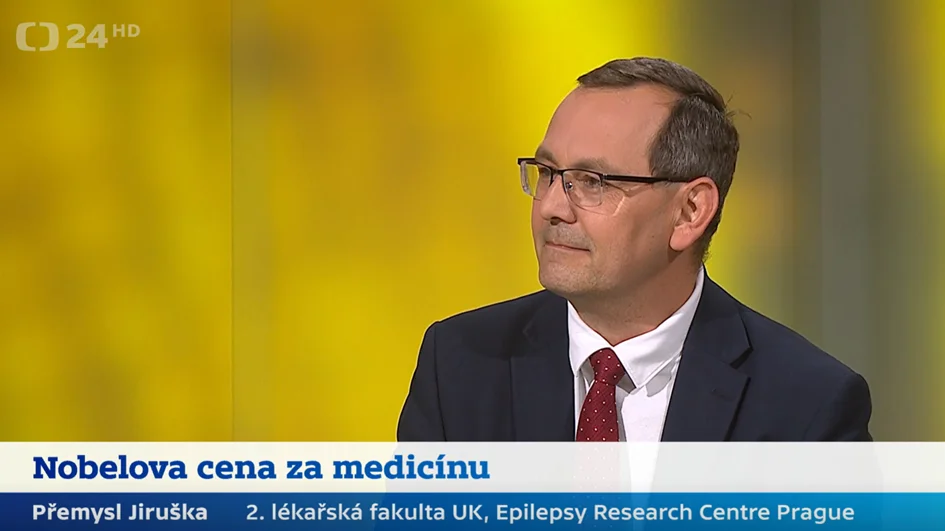
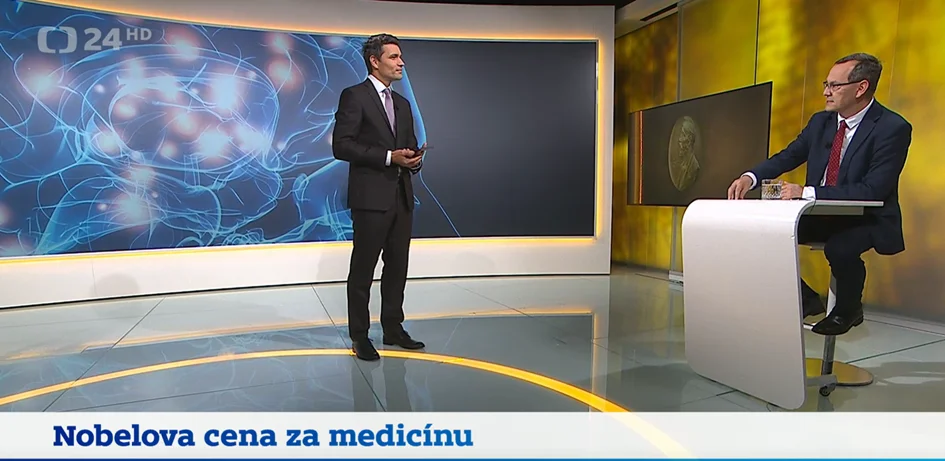
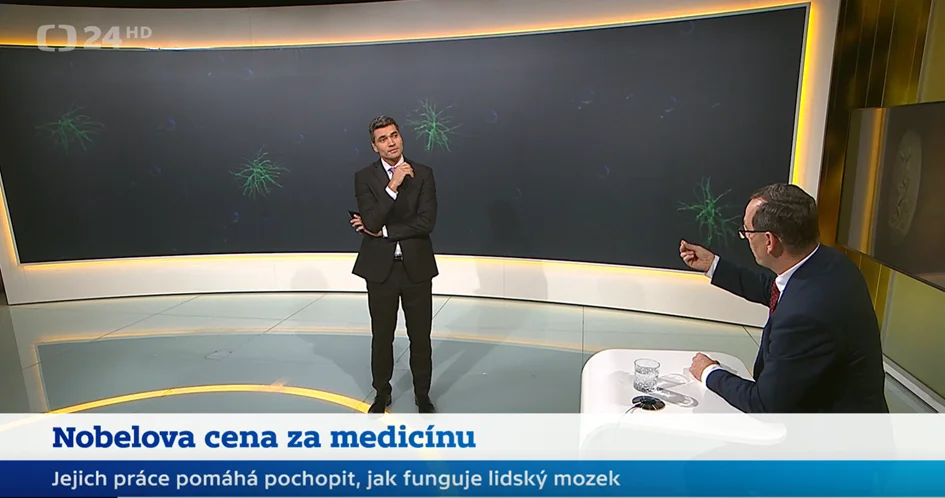
At the Second Faculty of Medicine, Charles University, this highly sophisticated experimental technology has been developed to a state-of-the-art level in the laboratories of the Prague Epileptology Research Centre (EpiReC). Researchers use optogenetics to selectively manipulate the activity of precisely defined groups of neurons, aiming to uncover the mechanisms underlying seizures in the most severe forms of epilepsy.
When combined with electrophysiological techniques, optogenetics allows researchers to investigate how individual groups of neurons and larger neuronal networks contribute to the initiation and spread of epileptic seizures. This provides a powerful means of understanding the complex mechanisms underlying epilepsy and seizure propagation and may ultimately contribute to the development of more targeted approaches to its treatment.
Research teams at the Prague Epileptology Research Centre (EpiReC) have been dedicated to investigating the most severe forms of epilepsy for many years.
Watch Prof. Přemysl Jiruška’s interview on Czech Television: https://www.ceskatelevize.cz/porady/10101491767-studio-ct24/226411058311005/